How a Life Dashboard Replaces Multiple Notion Templates
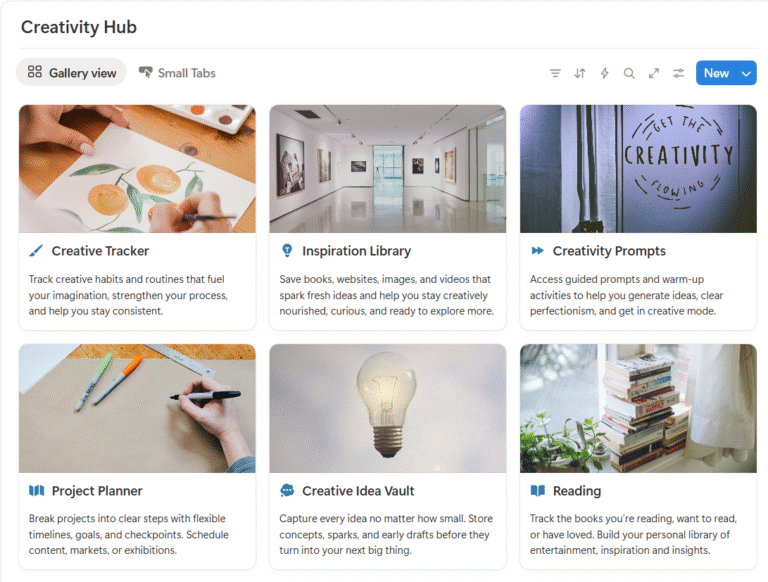
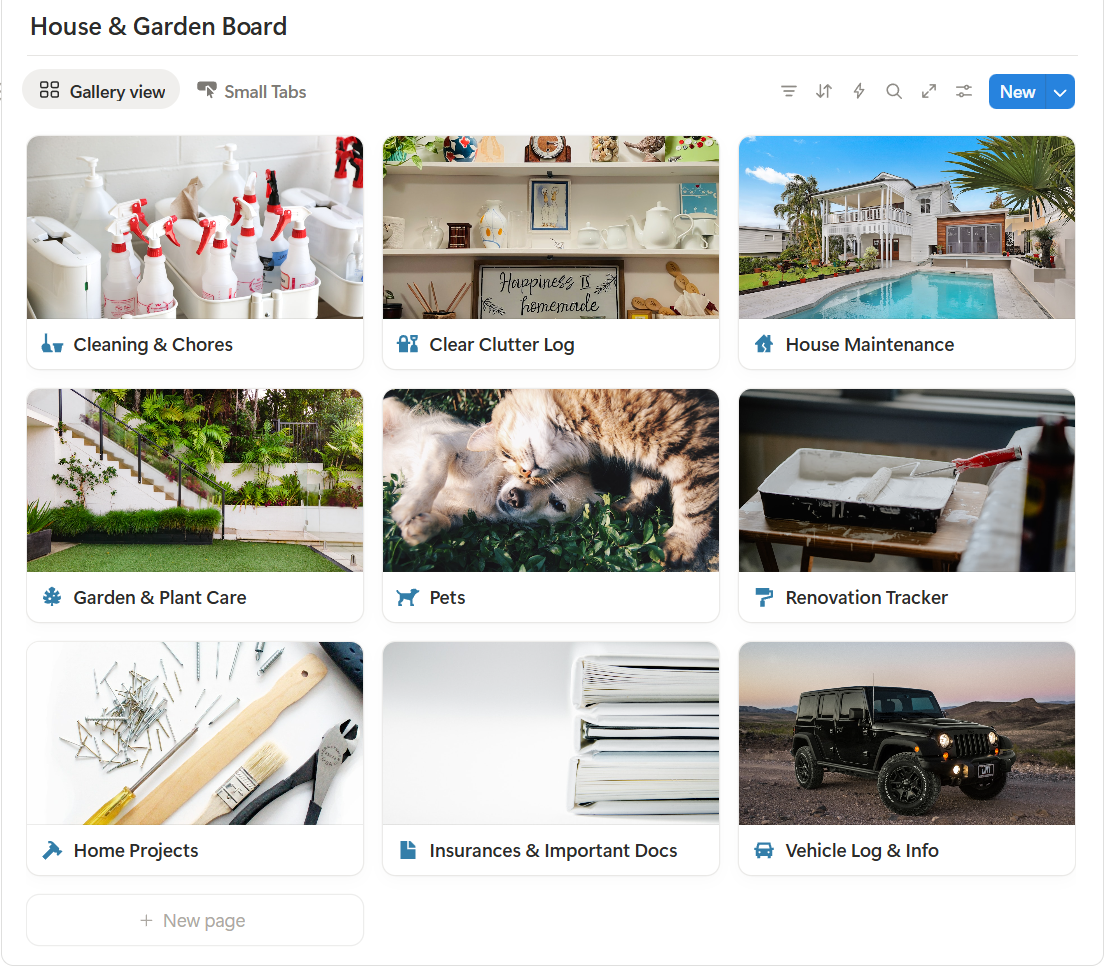
A life dashboard is not just another Notion template. It is a central system that replaces the need for dozens of separate tools, pages, and trackers. Many people start using Notion by collecting templates. Over time, this creates fragmentation rather than clarity.
The promise of templates is simplicity, but without integration they often lead to duplication and confusion. A life dashboard solves this problem by acting as the single place where everything connects.
The Hidden Cost of Template Collecting
Template collecting feels productive at first. You download a planner, a habit tracker, a project manager, and a goal setting page. Each one works in isolation, but none of them talk to each other.
Common problems include:
- Repeating the same information in multiple places
- Forgetting which template holds what
- Maintaining systems instead of using them
- Losing context between planning and action
A life dashboard removes this friction by consolidating systems into one structure.
What a Life Dashboard Actually Does
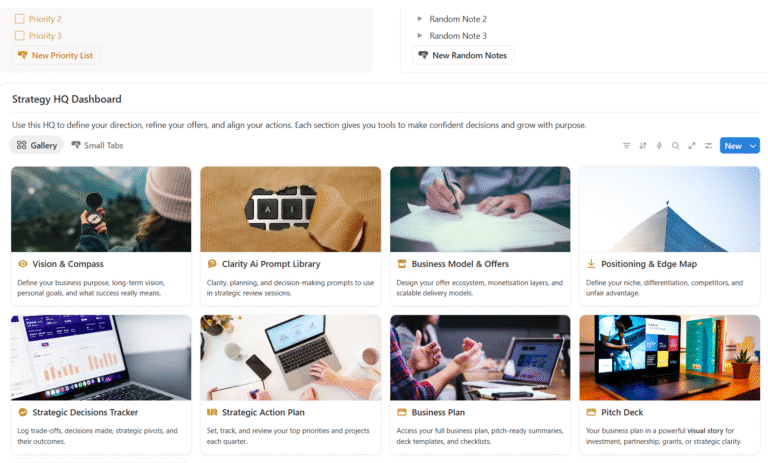
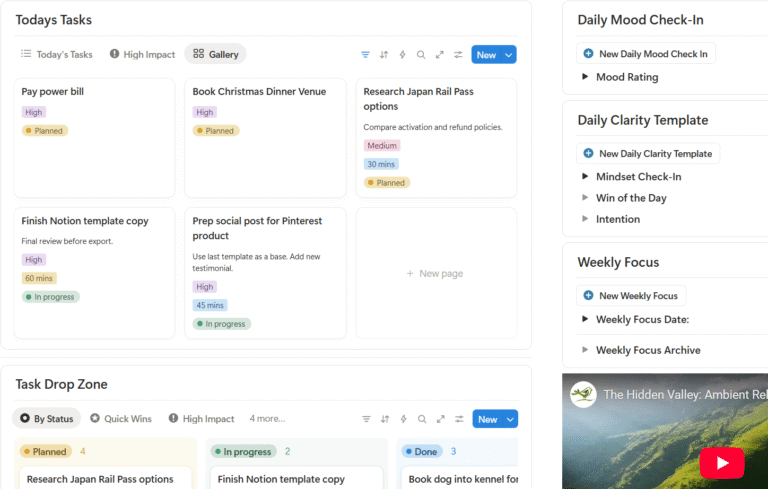
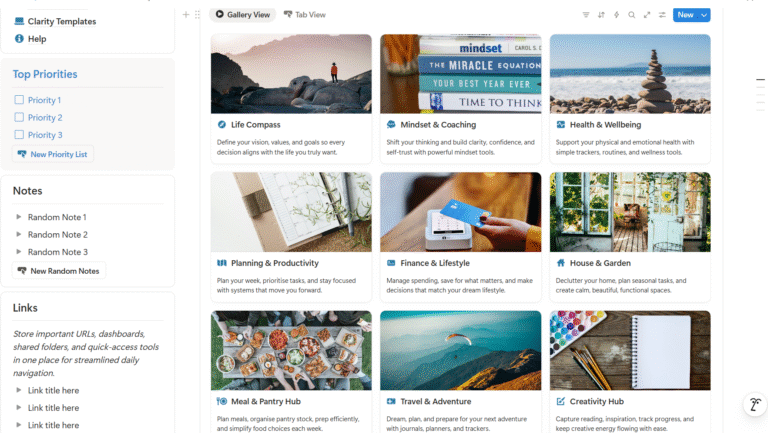
Instead of separating life into disconnected tools, a life dashboard creates one integrated environment.
It brings together:
- Planning and priorities
- Goals and long term direction
- Projects and tasks
- Notes and reflections
- Life areas such as wellbeing, home, and work
This integration is what allows a single dashboard to replace multiple Notion templates.
Why Integration Matters More Than Features
Most templates focus on features. A life dashboard focuses on relationships.
For example:
- A weekly plan connects to goals
- Goals connect to projects
- Projects connect to life areas
- Life areas connect back to values
This layered design reduces decision fatigue and makes planning feel grounded rather than overwhelming.
For a deeper explanation of how this structure works, it’s worth reading this brief article: Notion Life Dashboard What It Is and Why It Works
Fewer Systems Create More Consistency
Consistency does not come from having more tools. It comes from having fewer places to think.
When everything lives inside one life dashboard:
- You open one system daily
- You build familiarity
- You trust the structure
- You stop abandoning tools
This is why people who switch to a life dashboard rarely go back to scattered templates.
When Templates Still Have a Place
This does not mean templates are useless. Templates are valuable when they live inside a system.
A well designed life dashboard includes:
- Pre built templates within databases
- Guided structures for repeatable actions
- Consistent layouts that reduce thinking
The difference is that these templates live inside one ecosystem rather than competing for attention.
Using a Ready Built Life Dashboard
Some people enjoy building systems from scratch. Others want clarity without experimentation.
If you want a ready built life dashboard that already integrates planning, projects, reflection, and life areas, SYLO is designed for exactly this purpose.
It replaces dozens of individual templates with one cohesive system that grows with you.
Sort Your Life Out Dashboard might be worth it for you.
Final Thoughts
A life dashboard replaces multiple Notion templates not by doing more, but by doing less more intentionally.
When planning lives in one place, clarity becomes easier to maintain. Systems work best when they are trusted, familiar, and integrated.
Take a look at Sort Your Life Out Dashboard, it may just be thing you need to feel like you’ve got a handle on everything that is going on in your life.